


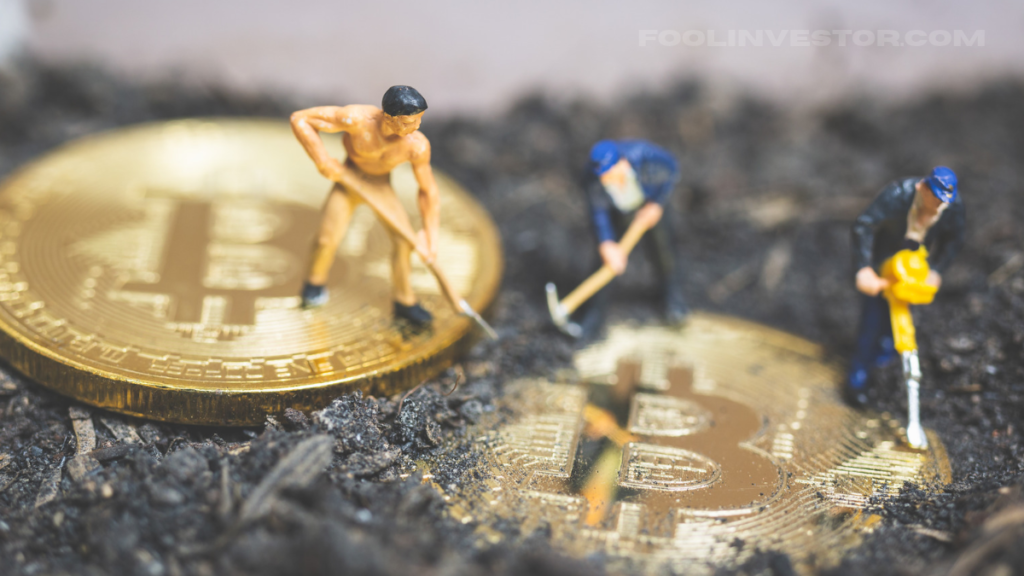
Bitcoin has something that makes it different from traditional currencies: there will only ever be 21 million Bitcoins.
Unlike governments, which can increase the supply of their national currencies, Bitcoin follows a fixed supply schedule built into its protocol.
But here’s the interesting question: What happens when the last Bitcoin is mined?
Will Bitcoin mining stop? Will miners disappear? Will Bitcoin transactions become expensive? And could Bitcoin become even more valuable because no new coins are entering circulation?
The answer is more interesting than you might think.
The last Bitcoin is expected to be mined around the year 2140. However, Bitcoin will not suddenly stop working. Instead, its economic system will enter a new phase where transaction fees become the main source of income for miners.
Let’s break down what could happen.
1. No New Bitcoins Will Be Created
Bitcoin was designed by its creator, Satoshi Nakamoto, with a maximum supply limit of approximately 21 million BTC.
This means miners cannot keep creating new Bitcoins forever.
Currently, new Bitcoins enter circulation through a process called Bitcoin mining. Miners use computing power to validate transactions and secure the network. In return, they receive newly created BTC and transaction fees.
However, the number of new Bitcoins miners receive decreases over time through an event called the Bitcoin halving.
Once the final Bitcoin fractions are issued, the block subsidy will reach zero.
What does this mean?
- No more newly created Bitcoins.
- The total supply will reach its protocol-defined limit.
- Existing Bitcoin holders will still be able to buy, sell and transfer BTC.
- Bitcoin will continue operating as long as its network remains functional.
In simple terms, Bitcoin will still exist, but its supply will no longer increase.
2. Bitcoin Miners Will Earn Money From Transaction Fees
This is probably the biggest change after the last Bitcoin is mined.
Today, Bitcoin miners make money in two ways:
- Block subsidy: Newly created Bitcoin awarded for mining a block.
- Transaction fees: Fees paid by people sending Bitcoin.
Currently, the block subsidy is 3.125 BTC per block, following the April 2024 halving. It will continue decreasing approximately every four years.
After the final Bitcoin is mined, the block subsidy will become zero.
So, how will miners survive?
They will depend entirely on transaction fees.
For example, imagine someone sends Bitcoin and pays a network transaction fee. The miner who successfully includes that transaction in a block collects the fee.
The more valuable Bitcoin transactions become, the greater the potential demand for block space and mining revenue.
However, there is one big question: Will transaction fees be enough to keep Bitcoin mining profitable?
Nobody knows for certain. It will depend on network activity, transaction demand, Bitcoin’s value and mining costs. What is the Bitcoin halving?+2
3. Bitcoin Mining Will Not Stop
A common misunderstanding is that Bitcoin mining will end when all 21 million Bitcoins are mined.
That’s not true.
Bitcoin mining is not only about creating new coins. It also helps verify transactions, add new blocks and protect the network against attacks.
Even after 2140, miners will still be needed to:
- Verify Bitcoin transactions.
- Add new blocks to the blockchain.
- Maintain network security.
- Collect transaction fees.
The main difference is that miners will no longer receive newly created BTC as a reward.
Think of it this way: Bitcoin mining will continue, but the way miners earn money will change.
4. Bitcoin Could Become Even More Scarce
One of Bitcoin’s biggest selling points is its limited supply.
There will never be more than approximately 21 million BTC under the existing protocol rules.
But here’s something many investors overlook:
Not every Bitcoin that has already been mined is still available.
Some Bitcoin has been permanently lost because people:
- Forgot their wallet passwords or lost private keys.
- Lost access to old hardware wallets.
- Sent Bitcoin to inaccessible addresses.
- Passed away without leaving access to their crypto wallets.
These coins may still exist on the blockchain, but nobody can spend them if the private keys are permanently lost.
This means the amount of Bitcoin actually available for buying and selling could be much smaller than the total mined supply.
As new Bitcoin issuance approaches zero, scarcity could become an even bigger part of Bitcoin’s investment story.
However, scarcity alone does not guarantee a higher price. Demand still matters.
5. Will Bitcoin’s Price Increase After All 21 Million Are Mined?
This is probably the question most Bitcoin investors want answered.
Will BTC become extremely expensive when the final Bitcoin is mined?
It could, but there is no guarantee.
Bitcoin’s price is influenced by supply and demand.
If more people, companies and institutions want to own Bitcoin while the available supply remains limited, that could create upward pressure on its price.
Consider three possible scenarios:
Scenario 1: Demand increases
More investors and businesses adopt Bitcoin. If demand grows faster than the available supply, BTC could become more valuable.
Scenario 2: Demand stays relatively stable
Bitcoin could continue operating as a digital asset without experiencing dramatic price increases simply because mining has ended.
Scenario 3: Demand decreases
If investors lose interest in Bitcoin or move toward competing technologies, its price could fall even though its supply remains limited.
The important point is that Bitcoin’s 21 million supply cap does not automatically make every Bitcoin worth more.
Investors should look at adoption, demand, regulation, network activity and market conditions rather than relying only on the scarcity argument.
6. Will Bitcoin Transactions Become More Expensive?
This is another important question.
Once mining rewards disappear, transaction fees will become the only direct revenue miners receive from Bitcoin blocks.
That could make transaction fees more important.
However, it does not automatically mean Bitcoin transactions will become expensive.
Bitcoin transaction fees are determined by demand for limited block space. When many people want their transactions confirmed at the same time, they may compete by offering higher fees.
When demand is low, fees can be cheaper.
There are also technologies such as the Lightning Network that allow users to make payments outside the main Bitcoin blockchain, reducing the need to record every small payment directly on-chain.
The future cost of Bitcoin transactions will depend on how the network is used and how its technology develops.
7. What Happens to People Holding Bitcoin Today?
If you own Bitcoin today, the end of mining does not mean your BTC will disappear.
Your Bitcoin will remain in your wallet, provided you maintain access to your private keys and the network continues operating.
Here is what Bitcoin holders should understand:
- Your existing BTC will remain yours.
- You can continue sending and receiving Bitcoin.
- You will still be able to buy and sell BTC through supported exchanges.
- No additional Bitcoin will be created after issuance ends.
- The market price will continue to depend on supply and demand.
You do not need to wait until 2140 to understand Bitcoin’s scarcity. Its limited supply is already built into its monetary policy.
For long-term investors, the bigger question is whether Bitcoin will continue attracting demand over the coming decades.
8. Can Bitcoin’s 21 Million Supply Limit Ever Change?
Technically, Bitcoin’s software rules can be changed. However, increasing the supply limit would be extremely difficult.
Bitcoin operates through a decentralized network of nodes, miners and users.
The 21 million supply limit is part of its consensus rules. Changing it would require widespread agreement among network participants to adopt new rules.
There is no central bank or single company that can simply decide to print more Bitcoin.
This is one reason Bitcoin supporters consider its fixed supply an important feature.
Under the current rules, the maximum supply is actually slightly below 21 million BTC because of how Bitcoin rounds mining rewards down to whole satoshis. Why is the Bitcoin supply limited?+1
How Many Bitcoins Are Left to Mine in 2026?
Here’s an important milestone: Bitcoin passed 20 million mined coins in March 2026.
That means more than 95% of the eventual supply has already been issued.
Bitcoin supply breakdown
20 million+
BTC already mined as of March 2026
95.2%+ mined
Less than 5% remaining
| Detail | Estimate |
|---|---|
| Maximum supply | 21 million BTC |
| Already mined | 20 million+ BTC |
| Remaining | Less than 1 million BTC |
| Current block subsidy | 3.125 BTC |
| Next halving | Around 2028 |
| Final issuance | Around 2140 |
Figures are approximate. The actual maximum issuance is slightly below 21 million BTC. The Block+2
Interestingly, the remaining Bitcoin will take more than a century to enter circulation because mining rewards continue getting smaller.
This is what makes Bitcoin’s supply schedule different from most traditional currencies.
Frequently Asked Questions (FAQs)
What happens when all 21 million Bitcoins are mined?
No new Bitcoins will be created. Miners will continue validating transactions and securing the network, but they will earn money entirely through transaction fees.
When will the last Bitcoin be mined?
The final fractions of Bitcoin are expected to be mined around 2140, assuming the current protocol rules and approximate block schedule remain in place.
Will Bitcoin stop working after 2140?
No. Bitcoin transactions, wallets, exchanges and mining can continue operating. Only the creation of new Bitcoin through block subsidies will stop.
Can Bitcoin exceed 21 million coins?
Not under the current consensus rules. Increasing the supply would require widespread agreement to change Bitcoin’s protocol rules.
Will Bitcoin become more valuable when all coins are mined?
Possibly, but not automatically. A fixed supply can support scarcity, but Bitcoin’s price will still depend on demand, adoption, investor confidence and market conditions.
Can miners still make money after all Bitcoin is mined?
Yes. Miners will earn transaction fees from users who want their transactions included in Bitcoin blocks. Whether those fees provide enough revenue to support mining is an important long-term question.
Is it too late to buy Bitcoin if most of it has already been mined?
Not necessarily. Bitcoin is divisible into 100 million smaller units called satoshis. You do not need to buy one whole Bitcoin to own BTC. However, Bitcoin remains volatile, and investors should understand the risks before buying.
Final Thoughts: Bitcoin’s Biggest Change Is Still Ahead
Bitcoin reaching its 21 million supply limit will be one of the biggest milestones in cryptocurrency history.
But it won’t mean the end of Bitcoin.
Instead, it will mark the completion of its planned supply issuance. Miners will transition entirely to transaction-fee revenue, while existing Bitcoin continues circulating through the network.
The interesting part is that more than 95% of Bitcoin has already been mined, yet the final fractions are expected to take until around 2140.
For investors, the real question isn’t simply how many Bitcoins are left.
It’s whether Bitcoin will still have strong demand, adoption and utility decades from now.
Bitcoin’s supply is predictable. Its future value isn’t.
Disclaimer: This article is for educational purposes only and is not financial advice. Cryptocurrency investments involve significant risks. Always do your own research before investing.