


Crypto mining has become one of the most talked-about technologies in the digital world. While many people associate mining with quick profits or high-powered machines, the reality is far more technical—and far more interesting. This guide breaks down what crypto mining actually is, why it matters, and the different mining methods used today.
What Is Crypto Mining?
Crypto mining is the process computers use to secure blockchain networks, verify transactions, and add new blocks to a cryptocurrency’s public ledger.
In simple terms, mining:
- Confirms and records transactions
- Helps maintain the decentralization of a blockchain
- Rewards miners with cryptocurrency for contributing computing power
Most well-known cryptocurrencies—such as Bitcoin—use mining as part of their blockchain design, relying on a mechanism called Proof of Work (PoW).
How Crypto Mining Works
Although each cryptocurrency has its own technical structure, mining typically follows three core steps:
1. Transaction Verification
Miners collect recent transactions and group them into a “block.”
These transactions must be validated to ensure no one is spending the same coins twice.
2. Solving Cryptographic Puzzles
Mining machines compete to solve a mathematical problem.
The first machine to solve it earns the right to add the block to the blockchain.
3. Receiving a Block Reward
Once the block is confirmed, the miner receives a block reward—a set amount of cryptocurrency distributed by the network.
This process keeps the blockchain secure, transparent, and tamper-resistant.
Types of Crypto Mining
There are several mining methods, each with different requirements and levels of accessibility. Below are the major types used across the industry.
1. Solo Mining
Solo mining means a miner operates independently without joining any mining pool.
How It Works
- The miner runs their own hardware
- Attempts to solve blocks alone
- Keeps the entire block reward if successful
Pros
- Full reward payout
- Maximum control over mining setups
Cons
- Requires significant computing power
- Low probability of earning rewards for small miners
Solo mining is typically used by those with large-scale or specialized mining equipment.
2. Pool Mining
Pool mining is the most common method today.
How It Works
Miners “pool” their computing power together, increasing their chances of solving blocks.
Rewards are divided among participants based on contributed power.
Pros
- More predictable payouts
- Suitable for small and mid-sized miners
Cons
- Fees for pool participation
- Shared rewards
Mining pools remain a popular entry point due to their reliability and lower barrier to entry.
3. Cloud Mining
Cloud mining allows users to rent mining power from data centers without owning hardware.
How It Works
- A third-party provider rents out computing power
- The user pays a fee
- Mining rewards (if any) are passed to the user
Pros
- No hardware maintenance
- Accessible to beginners
Cons
- Contract fees vary
- Not all providers are reputable
- Profitability depends on provider efficiency and market conditions
Cloud mining is mainly used for convenience, not control.
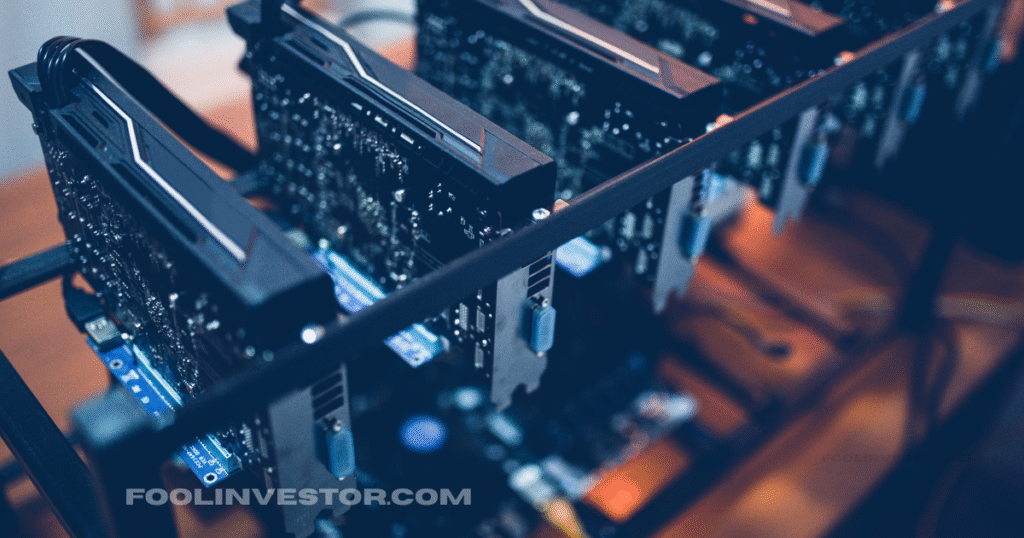
4. GPU Mining
GPU (Graphics Processing Unit) mining uses graphics cards to perform calculations.
Features
- Flexible for many cryptocurrencies
- Easier to upgrade hardware
GPU mining became widely known during the growth of cryptocurrencies that are GPU-friendly.
5. ASIC Mining
ASIC (Application-Specific Integrated Circuit) miners are machines built solely for mining.
Features
- Extremely powerful
- Highly efficient for PoW cryptocurrencies like Bitcoin
Pros
- Superior performance
- Better energy efficiency compared to GPUs
Cons
- Higher upfront cost
- Only works for specific coins
ASICs dominate networks that require heavy computational power.
6. CPU Mining
CPU mining uses standard computer processors.
It was popular in the early days of cryptocurrency but is now mostly used for smaller or newer networks.
Pros
- No specialized hardware required
- Easy to start
Cons
- Low performance compared to GPUs/ASICs
- Limited profitability on major networks
Is Crypto Mining Still Relevant Today?
Yes—crypto mining continues to play a key role in the security and stability of various blockchain networks.
However, mining trends shift as technology evolves, energy efficiency improves, and networks adopt new consensus models.
Mining is best viewed as a technical process, not a promise of financial gain. Profitability varies widely depending on:
- Hardware performance
- Electricity costs
- Network difficulty
- Market conditions
For most people, mining is primarily an exploration of blockchain technology rather than a guaranteed source of income.
Final Thoughts
Crypto mining remains an essential part of blockchain infrastructure. Whether using a single GPU or operating a large-scale mining farm, miners help secure networks and maintain decentralized systems.
Understanding the different mining types—solo, pool, cloud, GPU, ASIC, and CPU—provides a foundation for exploring how cryptocurrency networks function beneath the surface.
Disclaimer: This article is for informational purposes only and does not constitute financial, investment, or professional advice. Cryptocurrency mining carries risks, and results may vary.